
Holistic Transpersonal Therapy
& Counselling
MIND · BODY · SOUL · SPIRIT
A depth-oriented, trauma-informed approach that honours the spiritual dimensions of human experience and supports healing, self-understanding and personal transformation.
beechworth & online
REMEMBERING A DEEPER WHOLENESS
Holistic Transpersonal Therapy & Counselling begins from an understanding that we are more than our thoughts, behaviours, symptoms or trauma histories. Our wellbeing is shaped through the interconnected dimensions of mind, body, emotion, relationship, soul and spirit — and through our deeper sense of meaning, belonging and connection with the natural world.
This depth-oriented approach creates space to listen beneath the surface of what is happening and explore the patterns, experiences and inner movements that may be asking for attention. Depending on what is present for you, our work may include emotional and relational patterns, embodied experience, early life influences, inner conflict, identity, imagination, spirituality, meaning and times of significant transition or transformation.
Whether we meet in person or online, the work offers a space to slow down and listen more deeply to what is emerging within you, while strengthening connection with yourself, your relationships and your wider sense of belonging — including, where meaningful to you, your relationship with place and the natural world. Over time, this can support greater choice, authenticity and alignment in how you live and relate.
There is room here for the Wild and the Sacred — for the instinctive, embodied, imaginal and deeply alive dimensions of ourselves, alongside questions of soul, spiritual experience, meaning and mystery. No particular spiritual belief or worldview is required. The work remains grounded in your own experience, values and needs, while allowing space for deeper ways of knowing, belonging and being.
YOU ARE WELCOME HERE

I warmly welcome you here in all of your humanness — the messy, the uncertain, the parts that are hurting, and the parts that are longing for change, growth and healing. You may arrive with a clear sense of what you want to work on, or simply with the feeling that something in your life is asking for deeper attention.
I welcome that call toward something more — toward greater self-understanding, empowerment and authenticity; toward living in a way that feels more deeply aligned with who you are. Therapy can offer a space to meet what has been constrained, silenced or left behind, while reconnecting with your own inner knowing, vitality and the wild spark within you.
You do not need to have everything figured out before you begin. My role is to meet you with curiosity, respect and care, and to walk alongside you as we listen together to what is asking to be understood, tended and transformed.
— Eliza-Beth
“Healing doesn’t happen in the mind alone — it unfolds through the heart and in relationship.”
HOW WE MIGHT WORK TOGETHER
There is no single formula for how therapy unfolds, and no two sessions will look exactly the same. Our work is collaborative, responsive and shaped around you — what you are experiencing, what you are seeking, and what begins to emerge through the therapeutic process. We work at a pace that honours your needs, readiness and capacity.
Intentional, Relational & Collaborative
I bring an intentional presence to our work — taking time to centre, attune and hold a compassionate intention for healing, growth and greater wholeness, without prescribing what that needs to look like for you. We begin with what matters to you and remain open and curious about where the therapeutic process may lead. The relationship itself is an important part of the work — a space in which you can be met with care, honesty, curiosity and respect. What emerges through our sessions can continue to provide an anchor between sessions as new awareness, insights and possibilities unfold.
Trauma-Informed, Strengths-Based & Non-Pathologising
What you share is met with compassion and curiosity rather than judgement. Many of the patterns and ways of being we develop arise because they once helped us to adapt, protect ourselves, maintain connection or belong. Attention is given to safety, agency, pacing and to honouring your own wisdom in guiding the work. Alongside the wounding, I also recognise your strengths, resources and capacities, and look for the part of you that remains whole — what some might call the soul or deeper Self. I seek to witness and reflect this back so it can come more fully into view.
Neurodiversity-Affirming
If you are neurodivergent, you are welcome to bring your own ways of sensing, processing, communicating and relating into the therapeutic space, without pressure to mask or conform to neurotypical expectations. I adapt the work to your individual needs, honouring your autonomy, strengths, lived experience and what supports you to live more authentically.
Integrative & Holistic
Different people need different ways of working. Depending on what is present, I may draw on therapeutic conversation, embodied awareness, attachment-informed work, inner-parts exploration, imagination, dreamwork, reflective practices and other experiential approaches. I consider the interconnected dimensions of mind, body, relationship, soul and spirit rather than focusing only on symptoms.
Process-oriented, Depth-Oriented & Transpersonal
I listen not only to what is being spoken, but also to what may be emerging through emotions, body signals, dreams, images, recurring patterns and relationship dynamics. What appears at the edges of awareness can sometimes offer important clues about what is seeking attention, expression or integration.
There is also room to explore the deeper questions beneath what brings you to therapy — identity, meaning, purpose, spirituality, the Sacred and experiences of transition or transformation. You may be seeking healing from difficulty, or you may feel called toward greater self-understanding, authenticity, fulfilment and a fuller expression of who you are becoming. When these dimensions are meaningful to you, they are welcomed as part of the therapeutic process.
Nature, place & belonging
As an ecotherapist, I understand our wellbeing as inseparable from the natural world of which we are already a part. That relationship is always present, whether we meet indoors, online or outdoors. Where it feels supportive and relevant, we can bring this connection more consciously into the work — including taking therapy outdoors at Ashby Grove or in the Beechworth surrounds.
Sometimes nature remains a quiet part of the therapeutic field; at other times, relationship with place and the natural world may become a more deliberate and tangible part of the session.
Professionally Grounded
This work is grounded in professional therapeutic training, ethical practice, and trauma- and evidence-informed approaches, with ongoing professional development and clinical supervision.
WAYS WE CAN MEET
Therapy can take place in a number of different settings, depending on what feels most supportive and appropriate for you.
AT ASHBY GROVE
In person in the therapy room at Ashby Grove, a quiet and private five-acre property in Beechworth, North East Victoria,
surrounded by trees, open land and animals.
ONLINE
Meet from wherever you are, with the flexibility and accessibility of online therapy.
OUTDOORS
At Ashby Grove or in the Beechworth surrounds, where walking, sitting in place and relationship with the natural world can become a more tangible part of the therapeutic process.
The setting is something we can decide together and it does not need to remain the same from session to session. At times the work may be best held indoors or online; at others, moving outdoors may offer a different kind of spaciousness, perspective or support.
WHAT MIGHT BRING YOU TO THERAPY
People come to therapy for many different reasons. You may be moving through something painful or difficult, noticing patterns you would like to understand or change, or feeling called toward greater growth, expansion and a fuller expression of who you are becoming. Sometimes there is simply a sense that something in your life is asking for deeper attention.
You might be seeking support with:
Anxiety, stress, overwhelm or emotional distress
Trauma, complex trauma or difficult past experiences that continue to shape the present
Grief, loss or bereavement
Relationship difficulties, attachment wounds or recurring relationship patterns
Self-esteem, self-worth, identity or questions about who you are becoming
Life transitions, change, uncertainty or feeling at a crossroads
Feeling disconnected from yourself, others, your direction or sense of belonging
Understanding and supporting your needs, experiences and ways of being as a neurodivergent person
Spiritual experiences, spiritual emergence or spiritual crisis, integration following significant healing or spiritual experiences, and questions of meaning or the Sacred
A desire for greater self-understanding, personal growth and transformation
A longing for greater purpose, authenticity, alignment and fulfilment
You do not need to be in crisis to come to therapy
Therapy can also be a space for exploration, growth and self-discovery — a place to deepen your relationship with yourself, clarify what matters most to you, and move toward a life that feels more authentic, meaningful and aligned.
not sure whether this kind of therapy is right for you?
You are welcome to book a free 15-minute connection call to ask questions and get a feel for whether working together may be a good fit.
ABOUT YOUR SESSIONS
-
There is no set formula for a therapy session. We begin with what is present for you — what has been happening, what you are noticing, or what feels most important to bring into the space that day. Sometimes our work may centre around therapeutic conversation and reflection; at other times, we may work more experientially, drawing on embodied awareness, inner-parts exploration, imagery, dreams or other approaches that support deeper understanding and integration.
-
Not at all. You may arrive with something specific you would like to explore, or simply with a sense that something is not quite right, something is changing, or something in your life is asking for attention. You may also be looking for a space to feel heard, understood and supported without judgement or pressure to be fixed. Sometimes, you may simply want an hour devoted to yourself — a form of self-care and focused time to be with your own thoughts, feelings and inner experience, supported by another. We can begin wherever you are and allow the focus of the session to emerge together.
-
Over time, therapy can support a greater capacity to move from reacting automatically toward responding with more awareness and choice. This may include strengthening nervous system regulation, becoming less easily triggered by past experiences, and reducing the emotional charge carried by painful events, memories and experiences.
Healing can also happen through relationship. An attuned, authentic and trustworthy therapeutic relationship can offer new relational experiences that support the healing of attachment wounds and gradually reshape internalised expectations about ourselves and others. Over time, this can help strengthen a more nurturing and generative inner adult — one that is better able to recognise and respond to your own needs, soothe younger or more vulnerable parts of yourself, and relate differently to inner judges and critics.
As greater awareness and regulation develop, you may experience more ease in relationships and communication, a stronger capacity to recognise and express your needs and boundaries, and greater trust in yourself and your intuition.
Therapy can also deepen your understanding of who you are — your values, needs, patterns, strengths and what feels genuinely aligned for you. This growing self-knowledge can support choices and changes that feel more nourishing, authentic and true to the path you want to live.
-
When you are first beginning therapy, establishing a regular rhythm can be helpful. If you need significant support, moving through a particularly challenging period, or working with a specific area of focus or therapeutic goal, weekly sessions are often ideal.
If you are seeking ongoing support, reflection or personal growth without the same level of intensity, a fortnightly or monthly rhythm can work well. When beginning with fortnightly sessions, I often recommend starting with three fortnightly sessions before considering whether moving to monthly feels appropriate.
For some people, particularly those who have already undertaken a considerable amount of therapy and have a strong level of self-awareness and support, a book-as-needed approach may also be suitable.
The frequency of sessions does not need to remain fixed. We can review what feels supportive as the work unfolds and adjust the rhythm over time.
-
Yes. I work with primary-school-aged children and adapt sessions to their developmental needs, interests and ways of communicating. As an ecotherapist, most of my work with children takes place outdoors, where movement, play, sensory experience and relationship with the natural world can become part of the therapeutic process.
I also work with a number of children who access counselling through the NDIS, and where appropriate I collaborate with parents or carers to support the child’s broader wellbeing and therapeutic goals.
WORKING WITH ELIZA-BETH
I am a Holistic Transpersonal Therapist, Ecotherapist and PACFA Clinical Counsellor (Reg. 25215) with a practice grounded in trauma-informed, relational and depth-oriented approaches.
My professional training includes transpersonal therapy, ecotherapy and attachment-informed practice, along with additional training in understanding PTSD.
My broader work also draws on process-oriented approaches, Ancestral Lineage Healing, shamanic practice and ritual.
I am particularly interested in the intersection of healing and becoming — how therapeutic work can support greater freedom from old conditioning, a fuller expression of our authentic selves, and deeper relationship with soul, the natural world, mystery and the Sacred.
Rather than applying a predetermined formula, I seek to meet each person with curiosity, presence and care, supporting a therapeutic process that is responsive to who you are and what is emerging for you.
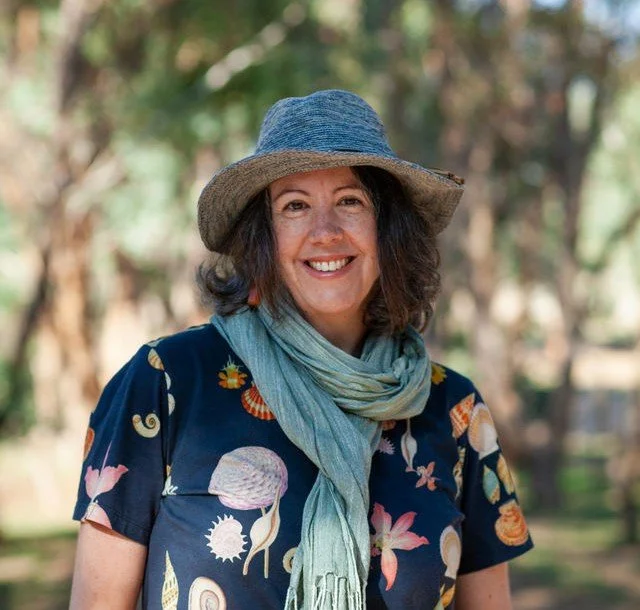
“I am very grateful to Eliza-Beth for her kindness, care and support over the years.
Her gentle guidance, deep listening and understanding have been invaluable in helping me navigate times of transition and challenge with greater clarity. I highly recommend her to anyone looking for a compassionate and insightful professional.”
— Holistic Transpersonal Therapy & Counselling client
INVESTMENT & SESSION OPTIONS
-
60-MINUTE SESSION $140
In person, online and outdoors by arrangement
A standard therapy session, suitable for ongoing therapeutic work, reflection and support.
-
90-MINUTE SESSION $210
In person, online and outdoors by arrangement
Offers more time for deeper exploration, experiential work or when a longer session feels supportive.
FUNDING & ACCESS
Alongside privately funded therapy, I also work with clients whose counselling is supported through the NDIS and Victoria’s Victims of Crime Financial Assistance Scheme (FAS).
ndis-funded counselling
I work with NDIS-funded clients, including adults and primary-school-aged children, where counselling is an appropriate support within their plan and funding arrangements. Sessions are adapted to individual needs and may be offered in person, outdoors or online where appropriate.
NDIS funding and invoicing arrangements can vary depending on how your plan is managed. Self-managed participants can use registered or unregistered providers, while arrangements differ for plan-managed and NDIA-managed funding.
Victims of Crime Financial Assistance Scheme (FAS)
I also provide counselling for people whose therapeutic support is funded through Victoria’s Victims of Crime Financial Assistance Scheme (FAS), including people seeking support following experiences of violence and trauma.
If you have been approved for counselling through FAS, or are unsure about the process, you are welcome to contact me to discuss your circumstances and next steps.
If you are unsure whether your NDIS or FAS funding can be used for sessions with me, you are very welcome to get in touch before booking so we can clarify what is possible.
For NDIS- and FAS-funded sessions, fees are charged in line with the applicable current funding schedule and invoiced after each session.
FREQUENTLY ASKED QUESTIONS
-
Holistic Transpersonal Therapy is an integrative approach to counselling and psychotherapy that works with the whole person — mind, body, emotions, relationships, soul and spirit.
Alongside the challenges or concerns that may bring you to therapy, it also makes space for questions of meaning, identity, growth, purpose and the movement toward a more authentic and fully expressed way of being.
The transpersonal dimension recognises that human experience can include spirituality, intuition, creativity, connection with nature, mystery and experiences of the Sacred. These dimensions are welcomed where they are meaningful to you, while the work remains grounded in your own experience, values and needs. No particular spiritual belief or worldview is required.
-
No. You do not need to hold any particular spiritual belief or worldview to work with me.
My approach makes room for questions of meaning, spirituality, soul, mystery and the Sacred where these are relevant to you, but they are never imposed or assumed. Our work remains grounded in your own experience, values, needs and understanding of what is meaningful.
Some people come to therapy with an established spiritual framework, while others are simply curious, uncertain, questioning or not spiritually oriented at all. All of these positions are welcome.
-
No. Sessions can take place indoors at Ashby Grove, online, or outdoors, depending on what feels most supportive and appropriate for you.
As an ecotherapist, I understand us as always in relationship with the natural world. In that sense, nature is never entirely absent from the therapeutic space — even when we are meeting indoors or online. Sometimes that relationship remains quietly in the background; at other times, working outdoors, walking, sitting in place or consciously bringing relationship with the natural world into the process may feel helpful.
No prior experience with nature-based practices is needed. We can work in ways that feel comfortable, relevant and meaningful for you.
-
No. You do not need a referral to book a private session with me. You are welcome to contact me directly or book online.
If your sessions are being funded through the NDIS, the Victims of Crime Financial Assistance Scheme (FAS), or another funding arrangement, there may be additional requirements or documentation involved. If you are unsure, you are welcome to get in touch before booking and we can clarify what is needed.
Where appropriate, and with your consent, I also welcome collaboration with your GP, medical practitioner or allied health team so that your care can be well supported and coordinated.
-
Yes. What you share in counselling is treated as confidential and your privacy is taken seriously.
There are some limits to confidentiality. Information may need to be disclosed where you have given consent, where there is a serious risk to your safety or the safety of another person, or where disclosure is required by law.
As part of maintaining professional integrity and ethical practice, I undertake regular clinical supervision. At times, de-identified case material may be discussed with my supervisor to support reflective practice, sound clinical judgement and the quality of care I provide.
Wherever practicable, I will discuss any need to share identifiable information with you and involve you in that process.
-
A psychiatrist is a medical doctor who has undertaken specialist training in psychiatry. Psychiatrists can assess and diagnose mental health conditions, prescribe medication, and provide medical and psychiatric treatment.
A psychologist must be registered with the Psychology Board of Australia through AHPRA. Psychologists are trained in psychological assessment and evidence-based psychological interventions. Cognitive Behavioural Therapy (CBT) and related approaches have a strong presence within Australian psychology training, although psychologists may draw on many different therapeutic approaches depending on their training and area of practice.
Counsellors and psychotherapists generally work through the therapeutic relationship, conversation and experiential processes to support emotional wellbeing, healing, self-understanding and change. Because counselling and psychotherapy are not currently regulated through AHPRA in the same way as psychology and psychiatry, practitioners’ training, experience and professional registration can vary.
I am a PACFA Clinical Counsellor (Reg. 25215). Clinical registration with PACFA reflects substantial post-qualification client experience and clinical supervision, together with ongoing requirements for professional supervision, continuing professional development, ethical practice and professional accountability.
There can be considerable overlap between these professions, and one is not necessarily better than another. The most appropriate support depends on your needs, the practitioner’s training and experience, and the kind of therapeutic relationship and approach that feels right for you.
My own therapeutic approach is holistic, relational and depth-oriented. Alongside attending to symptoms and difficulties, we can explore underlying patterns, embodied experience, attachment and relationship, meaning, identity, personal growth and the deeper questions of soul, nature and the Sacred. This can offer a different — and sometimes complementary — form of support alongside a more medically or diagnostically focused approach.
These professions can also work alongside one another, with each offering different forms of support depending on your needs.
-
Yes. Many people work with more than one practitioner, particularly when different forms of support are helpful for different aspects of their wellbeing.
A psychiatrist, psychologist, counsellor, GP or allied health professional may each bring a different perspective, scope of practice and way of working. My role can sit alongside these supports, offering a holistic, relational and transpersonal therapeutic approach that may complement other care you are receiving.
Where appropriate, and with your consent, I am also happy to collaborate with your broader care team so that the different parts of your support are working as coherently as possible.
-
My work is best suited to people who are able to engage in a reflective, collaborative therapeutic process and who are seeking support with healing, self-understanding, growth, relationships, trauma, meaning or personal change.
At times, another form of support may be more appropriate — for example, if you are experiencing an acute mental health crisis, need urgent psychiatric or medical assessment, require intensive case management, or would benefit from a specialist service beyond my scope of practice.
Where this is the case, I will be transparent about the limits of my role and, where appropriate, support you to identify other services or practitioners that may better meet your needs.